The library bag lives on the floor at the end of the sofa, right next to Hank's pen, and he has started resting his chin on it through the wire. I think he likes the smell of other people's houses on the books. Since mid-January that bag has been emptied and refilled four times.
Crate rest kept us home. Hank's surgeon wants him confined until his recheck in early March, and somebody needs to be within earshot most of the time, which has mostly meant me on the gray sofa under a blanket with a book. February in Minnesota was never going to be a social month. This one has been the quietest I can remember: radiators ticking, the white noise machine humming by the pen, and a seventy-something-pound dog snoring like an outboard motor.
Everything here came from the Cambridge branch of the East Central Regional Library. I put things on hold online and Caleb picks them up on his way home, which he says makes him feel like a courier.
The ones that carried me
- Peace Like a River by Leif Enger. A reread. A Minnesota family in the early 1960s, a winter journey out to the Dakota Badlands, and a father who might be able to work small miracles. I first read it in high school in Mora, and it landed completely differently at 32.
- I Cheerfully Refuse, also by Leif Enger. I liked the reread so much I put his newer one on hold the same night. A grieving man sets out sailing on Lake Superior in a strange, worn-down near future. A lot of cold water and a lot of kindness. Good company on a snoring-dog evening.
- The Sentence by Louise Erdrich. A bookstore in Minneapolis, a ghost who refuses to leave it, and a narrator I'd follow anywhere. Funny and strange in the best way.
- A Man Called Ove by Fredrik Backman. A grumpy widower, nosy new neighbors and a scruffy stray cat he insists he doesn't want. Mabel sat on it twice, which I'm counting as a review.
The dog books, because of course
When your dog spends eight weeks in a pen, you start wondering what's going on in his head. Inside of a Dog by Alexandra Horowitz is about how dogs actually take in the world, mostly through their noses, and it made me look at the snuffle mat in a whole new way. I also reread All Creatures Great and Small by James Herriot, which I do about every three years. A young vet in the Yorkshire Dales in the 1930s, cold barns, stubborn farmers, a lot of arms in a lot of cows. Every clinic I've worked at has had at least one battered copy in the break room.
And because I needed something slow, I read Braiding Sweetgrass by Robin Wall Kimmerer, a few essays at a time, mostly in the mornings while Hank worked on his breakfast. It's a botanist writing about plants, gratitude and paying attention. It made me impatient for the raised beds to thaw.
The ones I gave up on
I gave up on Wolf Hall by Hilary Mantel around page 90, and that's on me, not the book. Half the people in it seem to be named Thomas, and my brain on interrupted sleep could not keep them straight. I'll try again in summer with the windows open.
I also returned a big, very popular thriller after 50 pages. I'll leave it unnamed. It was a lot of short chapters ending in gasps, and my evenings already had enough of those every time Hank shifted his weight in the pen.
What made it work
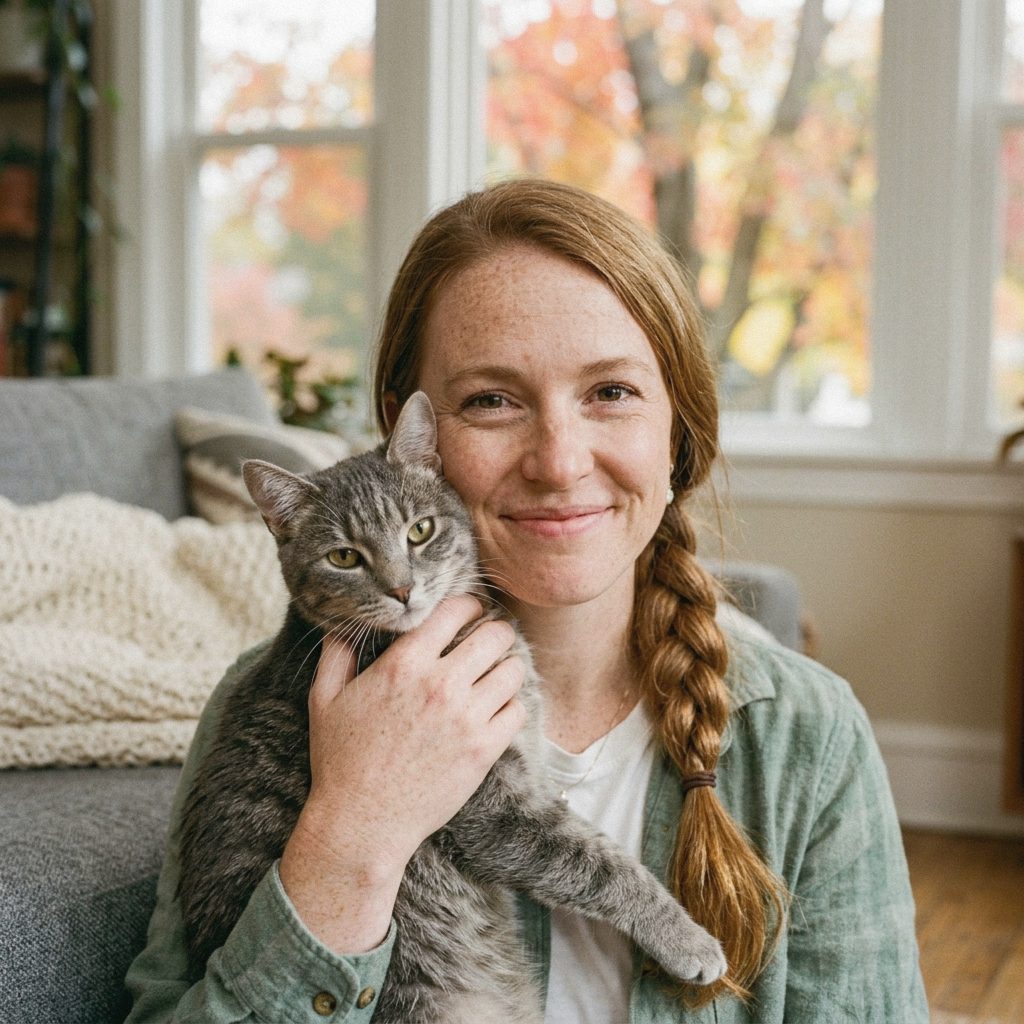
The blanket is the crocheted one from Grandma Lorraine that lives on the back of the sofa. The lamp is the old brass one by the built-in bookshelves, angled so it doesn't shine in Hank's eyes. Tea in the big mug, refilled at every potty break. Mabel, who took over Hank's empty bed a few weeks ago, sleeps there through most of it and only comes up onto my lap when I'm at a good part, which I've decided is a compliment to the book.
I have five more on hold for March. By then Hank should be on short leash walks, and I'll have less of an excuse to sit still. I'm already a little sad about it.