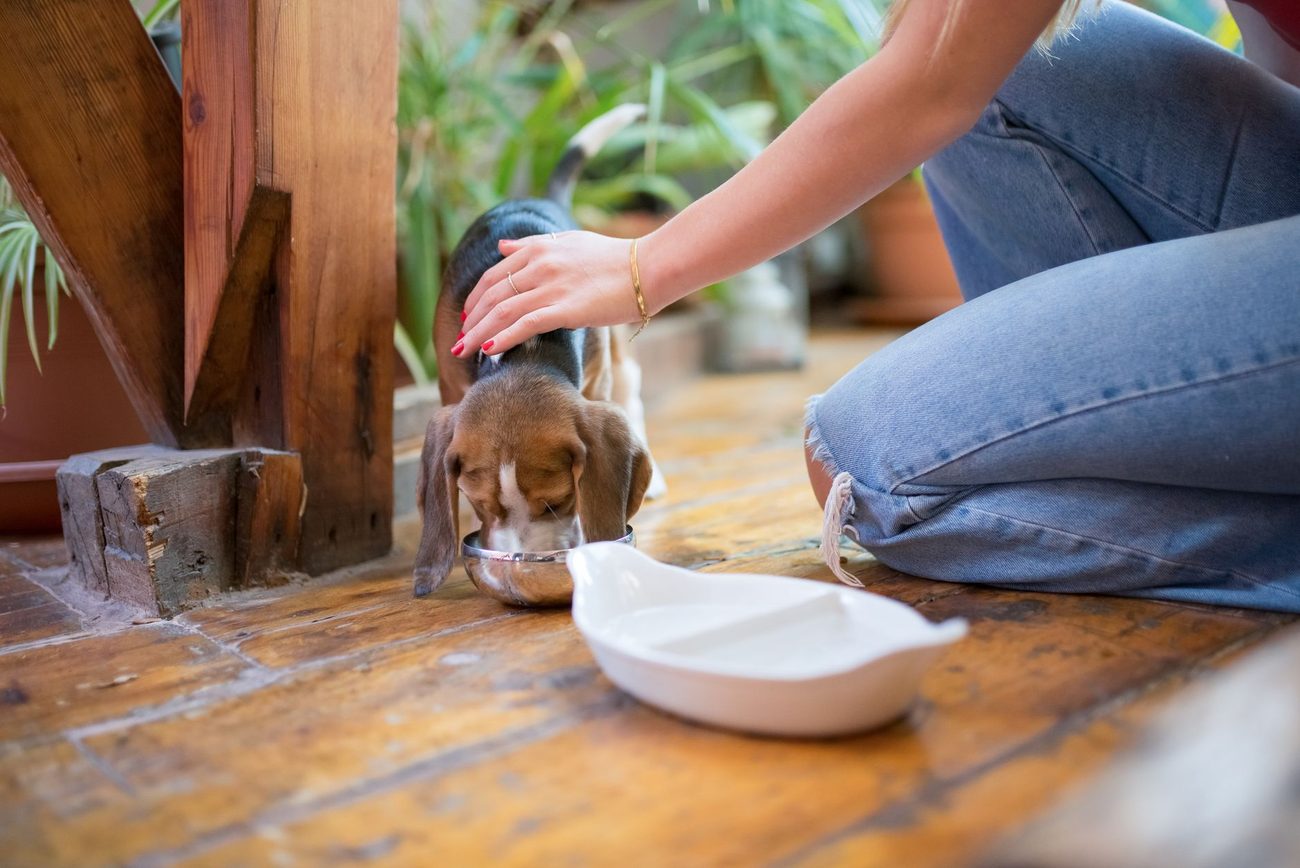
It was 84 degrees and sticky at seven o'clock last Sunday evening, and the walk bag hanging on the mudroom bench got its summer load-out. Every year around now the same handful of things go in, and every year I take out at least one thing that didn't earn its spot.
The bag itself is an old canvas hip pack from Fleet Farm, with a zippered main pocket and a mesh pocket on each side. It isn't cute, but it leaves both hands free for the leash and a squirrel-minded dog. The one downside is that a full water bottle thumps against my hip on every step, so I wear the pack slung around to the side, which looks a little like a holster. Nobody on our street has said a word about it.
What rides along
A collapsible bowl. Ours is silicone, folds flat to about the size of a coaster and clips to the outside of the bag. The old one finally cracked at the rim this spring after two summers of being clipped and unclipped, so I replaced it for $8. Silicone has held up much better than the fabric bowl we tried once, which soaked through and smelled like a swamp by August.
A squeeze bottle. A plain 20-ounce bike bottle, filled with cold tap water. Hank figured out long ago that if he stands with his mouth open, I'll squeeze a stream straight in, which is faster than the bowl and a lot funnier. On longer walks I fill the bowl. On short ones, he gets the stream.
Poop bags. A roll on the dispenser and a spare roll in a side pocket, because the day you skip the spare is the day you need three.
A few pieces of kibble. Counted out of his dinner, for recalls and rest stops. He's lean again after the knee, and we'd like to keep it that way.
A cooling bandana. This is the one new thing this year, $14, and the one I was most skeptical about. You soak it in cold water, wring it out and tie it around his neck, and as the water evaporates it pulls heat away. On a dry, breezy evening it really works. Hank pants less, and his neck stays cool to the touch for twenty minutes or so. On a humid 90-degree day it does very little, because nothing evaporates in air that thick. So it's a helper, not a reason to walk in the heat. I re-wet it from the squeeze bottle halfway around.
What didn't make the cut
- The bottle with the flip-out trough. It seemed clever. It leaked into the bag every single time.
- A clip-on light. Useful in November, pointless in June, when it's light out until nine-thirty.
- A retractable leash. We don't own one and won't. I've seen too many rope-burned fingers and tangled legs come through the clinic door, and a dog with a rebuilt knee doesn't need a sixteen-foot running start at a rabbit.
How the walk itself changes
Gear is only half of summer walking. The other half is timing. Once June hits the eighties, our walks move to early morning and late evening, the same schedule I wrote about last summer. I still do the hand-on-the-pavement test: if I can't hold the back of my hand on the asphalt for seven seconds, it's too hot for paws, and we stick to grass or wait.
This year there's an extra layer. Hank is six, a few months past knee surgery and still building back up to full-length walks after a winter of lying around. A dog who's rebuilding muscle tires faster in the heat, so we pick shady routes along the river, take more breaks and turn around sooner than he'd like.
Evening walks come with mosquitoes in June, which is the price of cooler pavement. I wear long sleeves and keep moving. Hank doesn't seem to notice them at all, and his monthly chew takes care of the things I actually worry about on him, so the bug spray in the side pocket is for me.
The signs I watch for are the ones I'd mention to anyone: panting that doesn't settle when we stop, slowing way down, thick drool, flopping onto every patch of shade. If your dog ever seems off in the heat, call your vet rather than waiting it out.
The bag is packed and back on its hook. Hank has already inspected it twice, mostly the side pocket with the kibble.